Sources & influences
Cicero
Orator and philosopher
106–43 BC
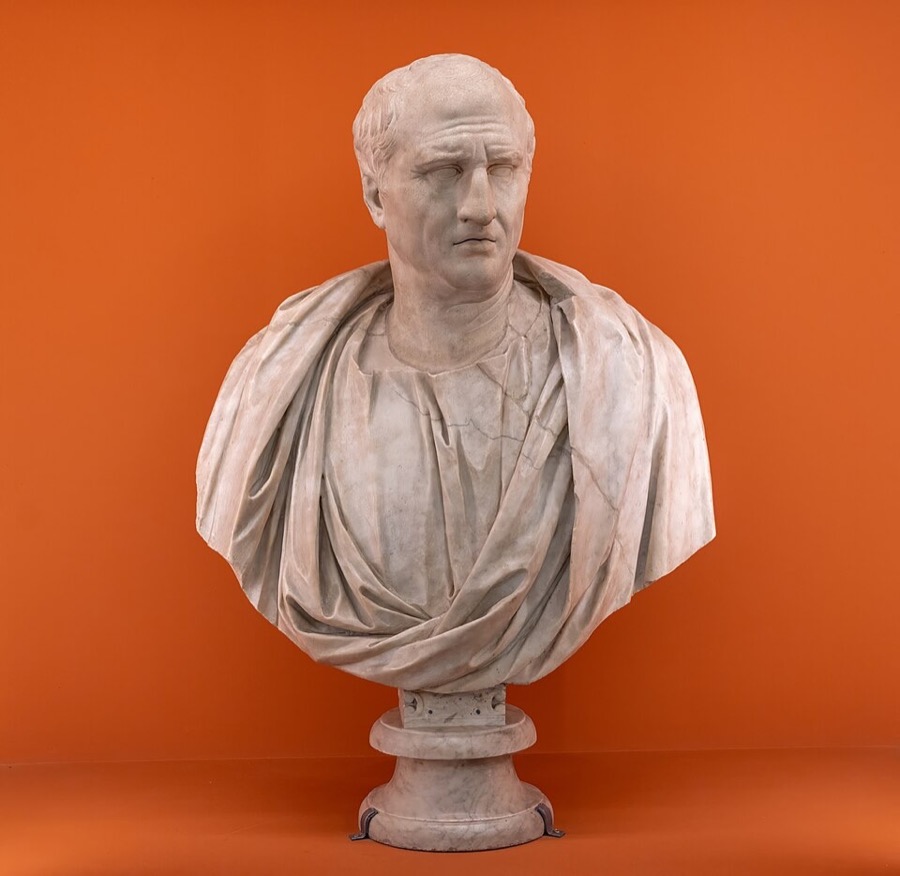
Bust, Capitoline Museums. A contemporary likeness.
Cicero belonged to the skeptical Academy and argued with the Stoics all his life, which did not stop him from becoming their most important transmitter. On Duties, written in a few months in 44 BC while Rome came apart, adapts the lost work of the Stoic Panaetius and became one of the most read books in Europe for the next sixteen centuries.
He was proscribed and killed the following year. Much of what we know about Stoic ethics, and about the arguments the school could not win, comes from a man who was reporting the other side's position in order to examine it.
What he taught
What is honorable and what is advantageous are not two questions. Treating them as two is how people talk themselves into things.
Works
- On Duties
- Tusculan Disputations
- On the Nature of the Gods
Who it is for
Anyone who wants Stoic ethics applied to public life and hard choices.
Where to start reading
 On Duties (De Officiis)
On Duties (De Officiis)
Cicero's last major philosophical work, written for his son in the year of his own assassination. Less austere than the imperial Stoics, more concerned with the practical Stoicism of public life: what duty asks of a citizen, a friend, a holder of office. The four cardinal virtues are systematized here in a form Renaissance humanists would later adopt as standard ethical training.
Some links above are affiliate links. How this works →

Marcus turns these voices into a daily practice: a morning compass, a daily reading, and a structured evening reckoning, for iOS.
Explore the app →