Memento Mori: Remember You Will Die
 By
By 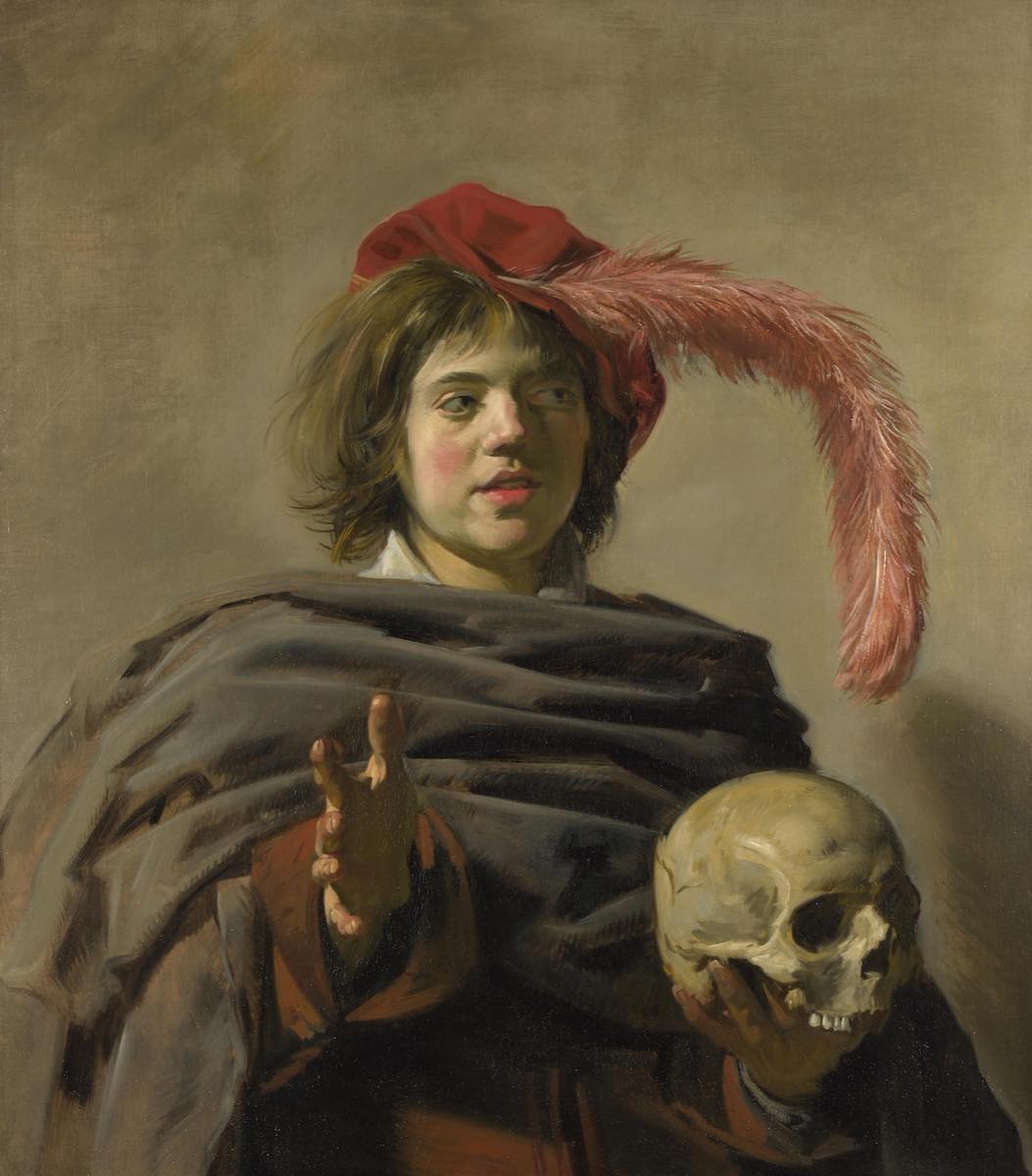
Memento mori is Latin for remember that you will die, and like amor fati it is a phrase that arrived after the philosophy it now labels.
The Stoics did not use it as a slogan. The tag belongs mostly to the Christian and medieval tradition, where it appears on tombs, in painting, and on objects designed to be looked at daily: skulls, hourglasses, extinguished candles. There is a persistent story about a slave whispering it behind a Roman general during a triumph, which is probably later invention.
The practice, though, is thoroughly Stoic, and it is arguably the load-bearing one. Take mortality out of Stoicism and most of the rest loses its urgency.
What the Stoics actually said
Epictetus, Enchiridion 21, gives the instruction in its plainest form:
Let death and exile and everything that appears terrible be daily before your eyes, but most of all death; and you will never think anything mean, nor desire anything excessively.
Note the promised effect. Not solemnity. Not fear. You will never think anything mean. The exercise is aimed at the pettiness that comes from believing you have unlimited time.
Marcus is more insistent about it than any other subject. You could leave life right now: let that determine what you do and say and think. Think of yourself as dead, having lived your life; now take what is left and live it properly. Do not act as if you had ten thousand years to live.
Seneca’s On the Shortness of Life makes the argument at length, and its central claim is the least comfortable thing in Stoicism: the problem is not that life is short. It is that we waste most of it and then complain it was short.
It is not that we have a short time to live, but that we waste much of it. Life is long enough if you know how to use it.
Why it is not morbid
Because it is not about death. It is about time.
Contemplating mortality does nothing to the ending; it changes what happens between now and then. The Stoic argument runs: you behave as though there is an unlimited supply, so you spend it on trivia, postpone what matters, and tolerate arrangements you would end tomorrow if you understood the arithmetic. Remembering the limit corrects the accounting.
Seneca’s sharpest observation is that we guard our money and our property carefully and are casually generous with our time, which is the only thing we can never get back. People will defend a small sum fiercely and give away an afternoon to someone they do not like.
The practice is therefore forward-facing. It produces a different Tuesday, not a preoccupation with the end.
The failure mode
It curdles when it becomes rehearsal of dying rather than clarification of living.
Signs you have drifted: the exercise leaves you anxious rather than focused; you are thinking about the mechanics of death rather than the shape of your week; it is producing urgency about everything rather than clarity about a few things. If mortality makes every task feel frantic, the accounting has gone wrong in the other direction, because a life spent hurrying is also a life spent badly.
The correct output is narrow. Not do everything faster, but rather: this is not worth what it is costing, and that has waited long enough.
It is also not permission for recklessness. "You could die tomorrow" does not license spending what you cannot spend or abandoning obligations. Marcus’s version is the opposite: because time is short, do your actual duty now, not because it is short, indulge yourself.
How to practice it
Daily, thirty seconds. In the morning, before the day is arranged: this day is not guaranteed and will not come again. Then the operative question, which is Marcus’s: given that, what is actually worth doing today? The answer usually removes two or three things.
Weekly, five minutes. Seneca’s version. Look back at the week and ask where the time actually went, honestly, including the parts nobody sees. Most people find a surprising amount was given away to things they would not have chosen if asked directly.
Occasionally, longer. Consider that the people you love are also on a limit, which is the version that changes behavior fastest and is the hardest to sit with. Marcus tells himself to say of anything he loves that it is mortal, so that when it goes he is not undone. Read coldly that sounds like detachment. Read properly it is the argument for paying attention now.
As an object. The medieval tradition understood something the texts do not say directly: the practice works better with a reminder you encounter without choosing to. A skull on a desk, a date on a wall, an image you did not have to seek out. Deliberate recollection is easy to skip.
Further reading
Seneca’s On the Shortness of Life is short, furious and the best entry point; Epictetus, Enchiridion 21, is two sentences. Marcus is everywhere on this, most concentrated in Book II. All are on our Library.
The complementary exercises are premeditatio malorum, for what has not happened yet, and the view from above, for things that have taken on a size they do not have.

Marcus turns this into a daily practice for iOS: a morning preparation, a daily reading, and a structured evening examination.
Explore the app →