The Stoics
Chrysippus
Systematiser of Stoicism
c. 279–206 BC
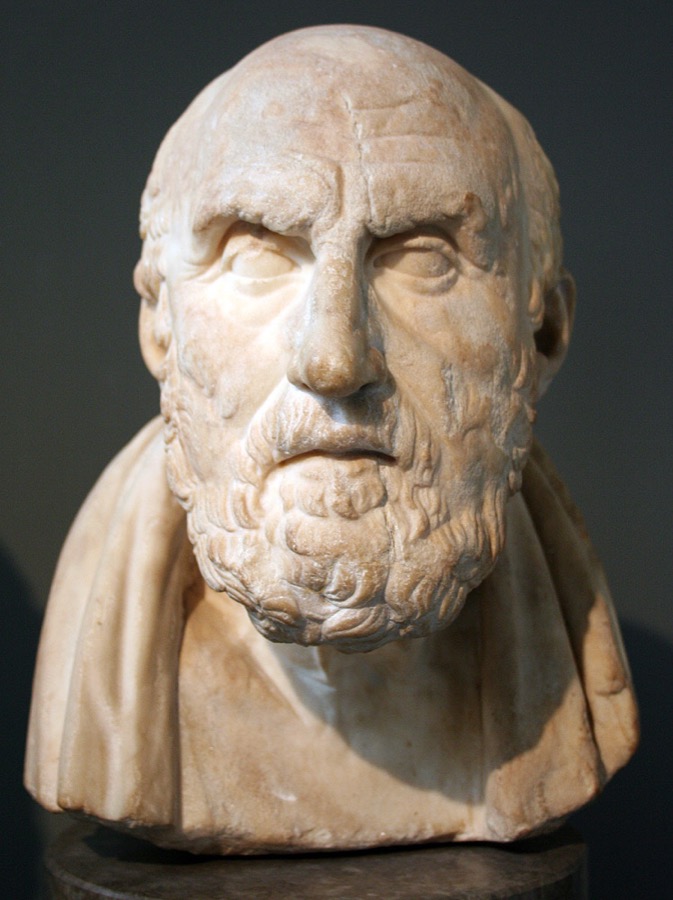
Roman copy of a Hellenistic original, British Museum. Widely accepted as a genuine likeness.
Chrysippus of Soli took over a school that was losing arguments and rebuilt its foundations. He is credited with something in the region of seven hundred books, and with a logic so far ahead of its moment that it was not properly understood again for two thousand years. The ancient verdict was blunt: if there had been no Chrysippus, there would have been no Stoa.
Every one of those books is lost. What we have is quotation, mostly by opponents, which means the most rigorous Stoic reaches us through people arguing with him. Diogenes Laertius reports that he died laughing at his own joke about a donkey eating figs, which may say more about ancient biography than about Chrysippus.
What he taught
Feelings are not weather. They follow from judgments you have made, which means they can be examined, and corrected.
Works
- On Passions (lost)
- Logical Investigations (fragments)
Who it is for
Anyone who wants the argument underneath the advice.
Where to start reading
 Stoicism (Ancient Philosophies)
Stoicism (Ancient Philosophies)
The serious scholarly introduction. Sellars is a philosopher specializing in the ancient Stoics. This is the book to read after the practical introductions if you want to understand the school's full architecture (logic, physics, ethics) and its place in ancient thought. Concise, dense, definitive.
 Philosophy as a Way of Life
Philosophy as a Way of Life
The book that recovered ancient philosophy as practice rather than theory. Hadot, French scholar, a generation's worth of work, argues that for the Stoics and their contemporaries, philosophy was a daily discipline of attention and exercise, not a body of doctrine. Foundational for understanding why Marcus is structured the way it is.
Some links above are affiliate links. How this works →

Marcus turns these voices into a daily practice: a morning compass, a daily reading, and a structured evening reckoning, for iOS.
Explore the app →