The Stoics
Cato the Younger
Senator and exemplar
95–46 BC
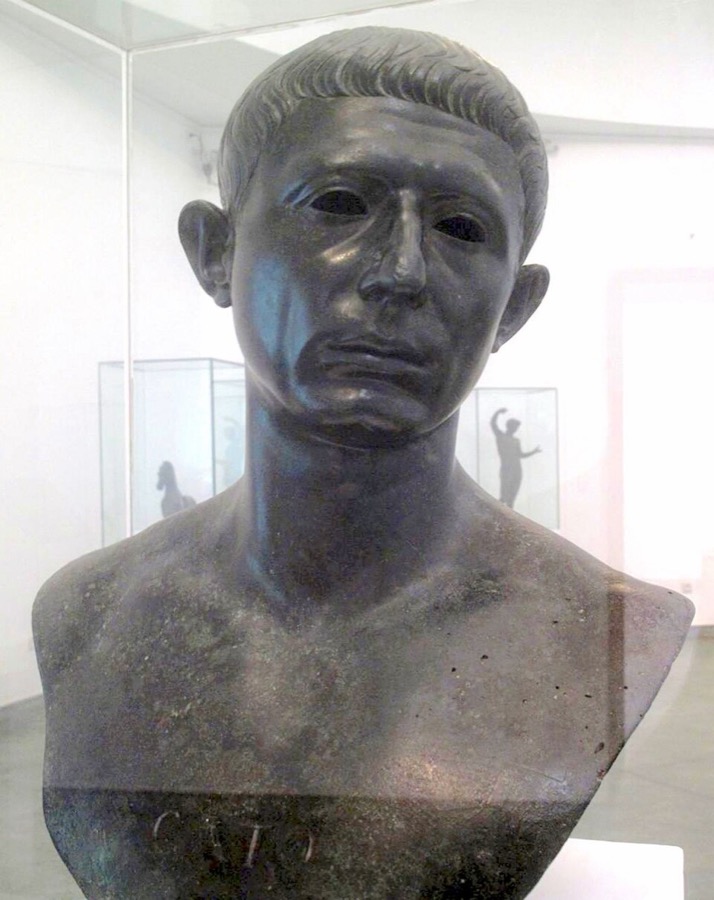
Bust from Volubilis, Morocco, traditionally identified as Cato. The identification is disputed.
Cato is the Stoic who left no philosophy, only a life that later Stoics pointed at when they needed to show the doctrine was livable. He walked bareheaded in the sun, went without, refused bribes in an age that assumed them, and opposed Caesar with a rigidity that his allies found exhausting and his enemies could not corrupt.
At Utica in 46 BC, with Caesar's victory complete and a pardon certain to be offered, he read Plato on the soul and then killed himself rather than accept it, on the grounds that accepting would concede Caesar the right to grant it. Seneca returns to him repeatedly as the nearest thing to a sage the tradition can name.
What he taught
A principle you abandon under pressure was a preference. The test is not whether you hold it, but when.
Works
- None survive; he wrote no philosophy
Who it is for
Anyone testing whether any of this survives contact with real cost.
Where to start reading
 Stoicism (Ancient Philosophies)
Stoicism (Ancient Philosophies)
The serious scholarly introduction. Sellars is a philosopher specializing in the ancient Stoics. This is the book to read after the practical introductions if you want to understand the school's full architecture (logic, physics, ethics) and its place in ancient thought. Concise, dense, definitive.
Some links above are affiliate links. How this works →
Marcus turns these voices into a daily practice: a morning compass, a daily reading, and a structured evening reckoning, for iOS.
Explore the app →