Sources & influences
Heraclitus
Pre-Socratic philosopher
c. 535–475 BC
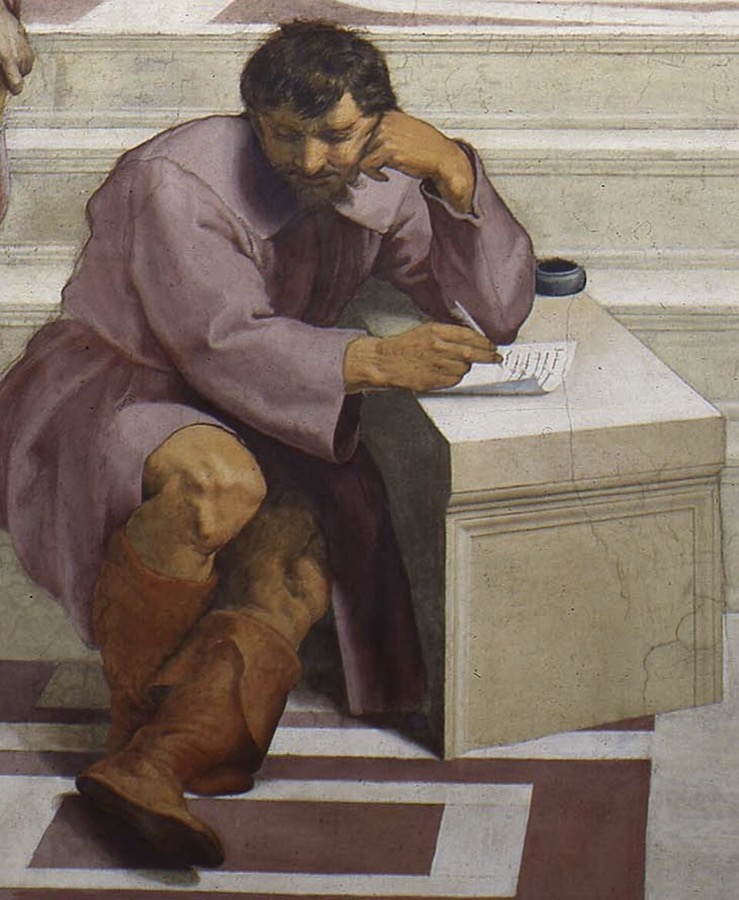
No authentic likeness survives. This is Raphael, who painted Heraclitus with the face of Michelangelo, in The School of Athens, 1510.
Heraclitus of Ephesus wrote in deliberate riddles and was called the Obscure for it. Only fragments survive, and they are the kind that lodge: that you cannot step into the same river twice, that character is fate, that the way up and the way down are one and the same.
The Stoics took two things from him and built on both. The first is the logos, an ordering rationality running through the world rather than standing outside it. The second is fire as the underlying stuff of things, which became the Stoic account of a cosmos that periodically burns down and begins again. Marcus quotes him directly, centuries later, still working on the river.
What he taught
Nothing holds still, including you. Stability is not a state you reach but a way of moving.
Works
- On Nature (fragments only)
Who it is for
Anyone curious where the Stoic idea of a rational cosmos actually came from.

Marcus turns these voices into a daily practice: a morning compass, a daily reading, and a structured evening reckoning, for iOS.
Explore the app →