The Stoics
Marcus Aurelius
Roman Emperor
121–180 AD
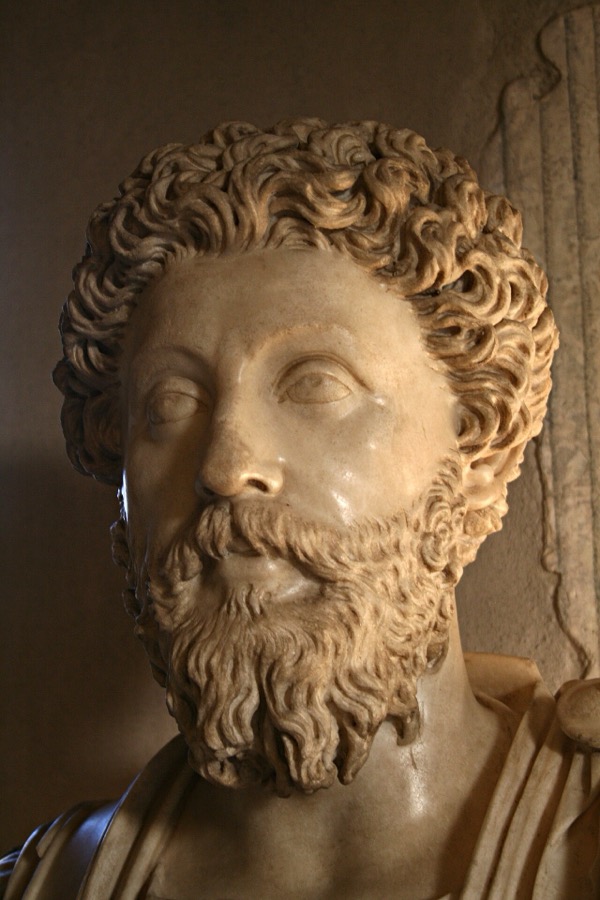
Bust, Capitoline Museums, Rome. A contemporary likeness; his features are among the best attested of any Roman.
Marcus ruled for nineteen years through plague, near-constant war on the Danube, and the revolt of a trusted general. He had not wanted the job. The notebooks he kept were written in Greek, on campaign, for an audience of one, and were never intended to be read by anyone.
That is why they work. There is no argument being won and no reader being impressed. There is a man reminding himself, again, that the people he will meet today will be difficult, that he will die, that the only thing genuinely his is how he meets what arrives. He repeats himself constantly, which is what practice looks like from the inside.
What he taught
You can step back far enough to see your circumstances at their actual size. What is left, once you do, is what you were going to do about them.
Works
- Meditations
Who it is for
Anyone carrying responsibility they did not ask for.
Where to start reading
 Meditations
Meditations
The private journal of a Roman emperor, written for himself in moments stolen from the work of running an empire. The Hays translation is the modern standard, direct, unornamented, hits with the immediacy of a contemporary voice. The single most important book in the canon. Start here.
 The Inner Citadel: The Meditations of Marcus Aurelius
The Inner Citadel: The Meditations of Marcus Aurelius
The single best companion to Meditations. Hadot reconstructs the spiritual exercises Marcus was performing in each entry: the discipline of assent, the discipline of desire, the discipline of action. After reading this, Meditations stops feeling like aphorisms and starts feeling like a practice manual.
 How to Think Like a Roman Emperor: The Stoic Philosophy of Marcus Aurelius
How to Think Like a Roman Emperor: The Stoic Philosophy of Marcus Aurelius
Robertson is a cognitive-behavioral therapist who traces the lineage from Stoicism through CBT. Reads as a biography of Marcus interleaved with practical exercises drawn from his journal. The closest book to Marcus's own structure: ancient philosophy as evidence-based mental practice.
 Marcus Aurelius: A Life
Marcus Aurelius: A Life
The major modern English biography of Marcus. McLynn places Meditations in the full context of the empire Marcus actually ran: the Antonine plague, the Marcomannic wars, the difficult son who succeeded him. Reading the journal alongside the life makes both more legible.
Some links above are affiliate links. How this works →

Marcus turns these voices into a daily practice: a morning compass, a daily reading, and a structured evening reckoning, for iOS.
Explore the app →