The Stoics
Seneca
Statesman and writer
c. 4 BC–65 AD
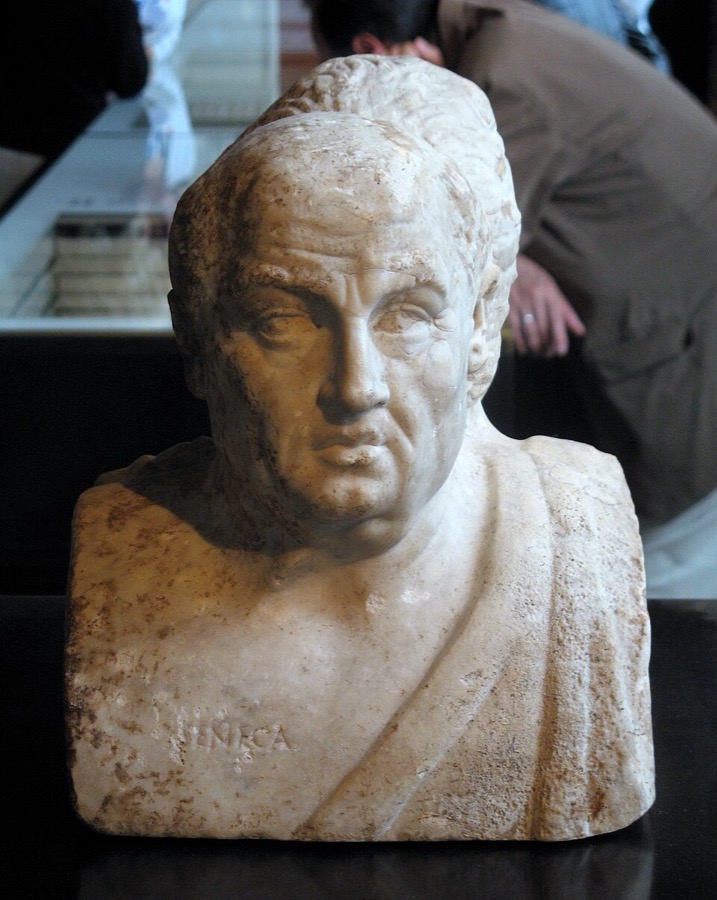
Double herm, Antikensammlung Berlin, the side inscribed SENECA. Not the "Pseudo-Seneca" bust, now generally identified as Hesiod.
Seneca wrote the most companionable prose in Stoicism and lived the least defensible life in it. He was exiled to Corsica for eight years, recalled to tutor the young Nero, and became for a time the most powerful man in Rome after the emperor, accumulating a fortune while writing about the worthlessness of fortune. The gap has been held against him ever since, and he held it against himself in print, which is part of why the letters still land.
In 65 AD, implicated in a conspiracy, he was ordered to die and did so slowly and in public. What survives is a hundred and twenty four letters to a friend, a set of essays including one on how little of our time we actually use, and tragedies that are stranger than any of it.
What he taught
You are not short of time. You waste most of it, and then call the remainder brief.
Works
- Letters to Lucilius
- On the Shortness of Life
- On Anger
Who it is for
Anyone who has ever known exactly what to do and not done it.
Where to start reading
 Letters from a Stoic
Letters from a Stoic
124 letters written near the end of Seneca's life to his friend Lucilius. Each is short, self-contained, and addresses a single subject: anger, time, the fear of death, the practice of friendship. The Penguin edition is the classic. Reads like a master practitioner thinking out loud across a desk from you.
 On the Shortness of Life
On the Shortness of Life
Three short essays. The title essay is one of the most important Stoic texts on time: how we squander it, how we mistake busyness for living, what it costs to keep postponing the work that matters. Reads in an hour. Worth re-reading every year.
Some links above are affiliate links. How this works →

Marcus turns these voices into a daily practice: a morning compass, a daily reading, and a structured evening reckoning, for iOS.
Explore the app →